Updates
Visualizing Ontario's Soil Registry
The Phil App Launches a Free Website to Shine Light on Ontario's Darkest and Dirtiest Problem
The Phil App Launches a Free Website to Shine Light on Ontario's Darkest and Dirtiest Problem
Canada's only excess soil marketplace goes on a side quest -- and uncovers critical questions about whether Ontario's soil regulations are actually working.
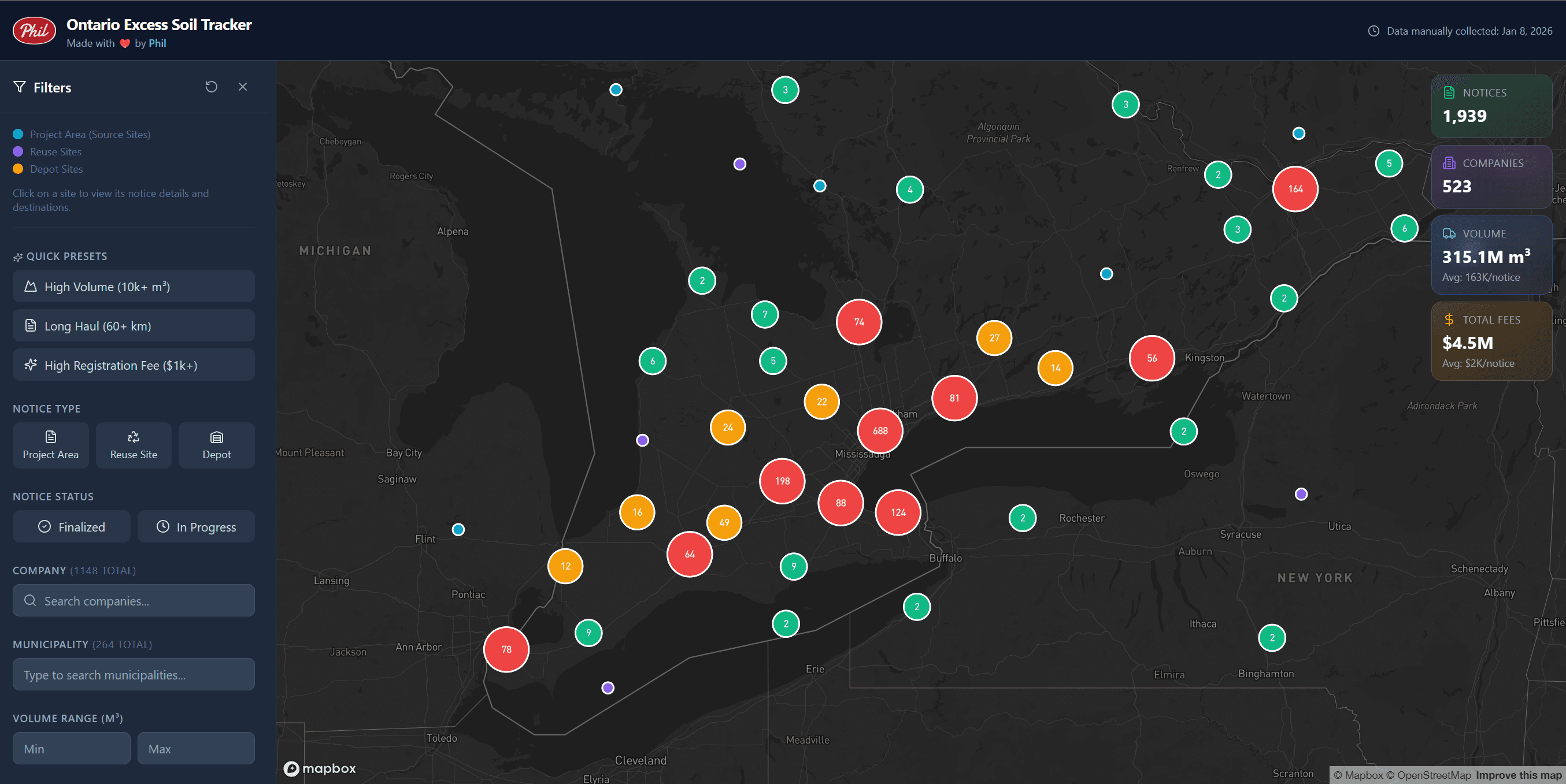
The Phil App, today announced the launch of the Ontario Soil Tracker -- a free website that makes Ontario's Excess Soil Registry data accessible for the first time. Available now at www.ontariosoiltracker.ca.
Some background; Every construction site has the wrong amount of soil, either too much or not enough. Every year, tens of millions of tonnes of contaminated soil is generated by projects across Ontario, where did it go? Under provincial regulations, builders must track where this soil comes from, where it goes, and what it contains. Non-compliance carries significant penalties, but enforcement is rare, digital tracking is not widely adopted, and paper tickets have a habit of disappearing.
"Ontario effectively has no data. Less than 15% of sites are registered -- the program is too expensive and the incentive structure is wrong. A marketplace fixes that: quality listings get quality matches, so being compliant saves you money."
-- Bryan Kerr, Co-founder, The Phil App
Ontario's Landfills Will Be Full in 7 Years
80% of reusable soil is sent to landfill rather than redirected to a nearby site that will build with it. Disposing of a single truckload can run up to $1,500, while nearby sites would take the same soil for free if it’s tested. Ontario's landfills are projected to reach capacity within seven years, and excess soil is massively accelerating the timeline. Soil will be banned from landfills in 2027 but there’s no process in place for redirecting it, it’s going to end up in illegal dump sites. New landfills are almost impossible to approve.
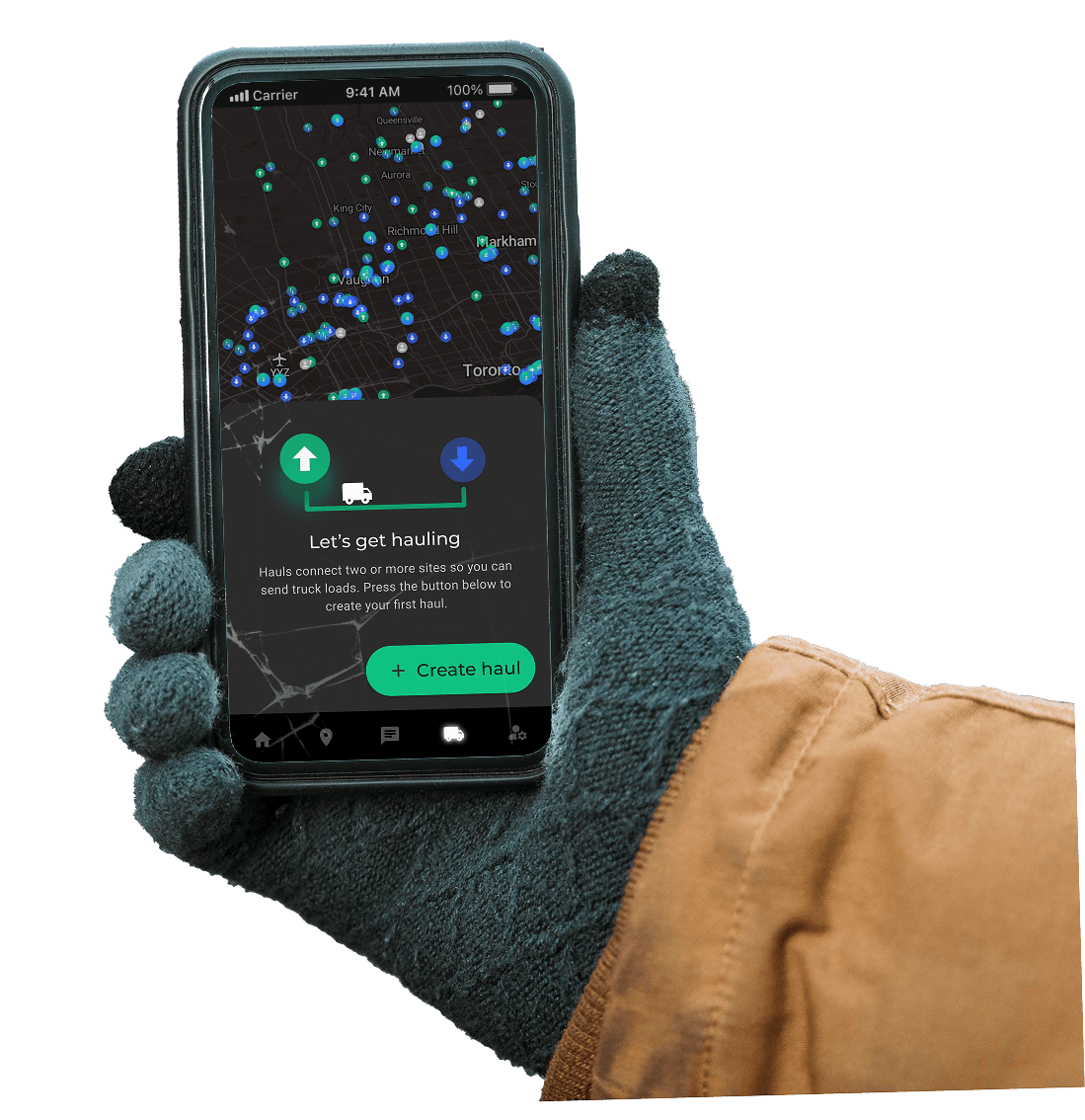
The average haulage distance for excess soil in Ontario is 65 kilometres -- driven by a lack of coordination, not a lack of nearby options. Like a dating app for construction sites, Phil matches source sites with receiver sites. It's working: hauls on the platform average just 29 kilometres, a 55% reduction that cuts costs, truck trips, and carbon emissions. Phil is Canada's only open marketplace of its kind, and load tracking is free for all users.
"We may be the only group in Ontario with a real picture of how much contaminated soil is being generated and where it ends up. Many of our 4,000 users asked us to help fix the official registry. After three years of trying through official channels, we decided to just build it ourselves. People don’t realize how big of an issue this is. If you drink well water or eat Ontario food, you should be paying attention."
-- Bryan Kerr, Co-founder, The Phil App
The Side Quest: Making the Official Registry Useful
Ontario's official excess soil registry uses dated technology, has a giant operating budget, and charges project owners up to $230,000 to register a large site - a fee that includes no services and places you on a list for enforcement visits. Those fees have increased by more than 2000% since 2022. Less than 15% of sites participate as a result. It's not able to capture data or make it accessible.
The Ontario Soil Tracker shines light on this issue, aggregating and visualizing publicly available registry data so anyone can explore the questions the industry has been asking for years:
-> How much soil is moving across Ontario, and where is it going?
-> Are the province's excess soil regulations achieving their stated outcomes?
-> What does participation in the program actually cost builders?
-> How much of what moves in Ontario is simply unknown or unreported?
No login, subscription, or Phil account required. The tool is designed for earthmoving contractors, environmental consultants, municipal planners, journalists, and policymakers -- anyone who wants to understand whether Ontario's regulatory framework is doing what it was designed to do.
Transparency as a Public Good
Phil's goal is for every load of soil to move the shortest distance possible to a compliant site, this requires data. Better data leads to better decisions -- for contractors, for regulators, and for the environment. Making the registry navigable is a step toward an industry where compliance is easier, haul distances are shorter, and no one has to wonder whether the rules are working.
KEY STATS
65 km -> 29 km
Average Ontario haulage distance vs. average Phil user haul | 55% reduction
About The Phil App
The Phil App is Canada's only open excess soil marketplace and free load tracking platform, connecting construction source sites with receiver sites to reduce haulage distances and the costs and emissions that come with them. Available to municipalities, contractors, developers, and earthmovers at www.getphil.app. The Ontario Soil Tracker is a free companion tool at www.ontariosoiltracker.ca.
Media Contact
Bryan Kerr, Co-founder -- The Phil App
bryan@getphil.app
www.getphil.app | www.ontariosoiltracker.ca